
Cable Tray Manufacturers in Chennai
In a world where wires often get lost in a tangle of chaos, cable systems emerge as the unsung heroes of modern infrastructure. They don’t just hold cables; they bring order, efficiency, and safety to every space they touch. From industrial floors humming with machines to sleek office environments buzzing with technology, cable systems ensure that power and data flow seamlessly without interruption.
Choosing the right provider, like trusted cable tray manufacturers in Chennai, ensures you get durable materials, precise layouts, and professional installation that lasts for years. These systems act as the silent backbone of modern infrastructure, supporting every device, machine, and network without disruption.
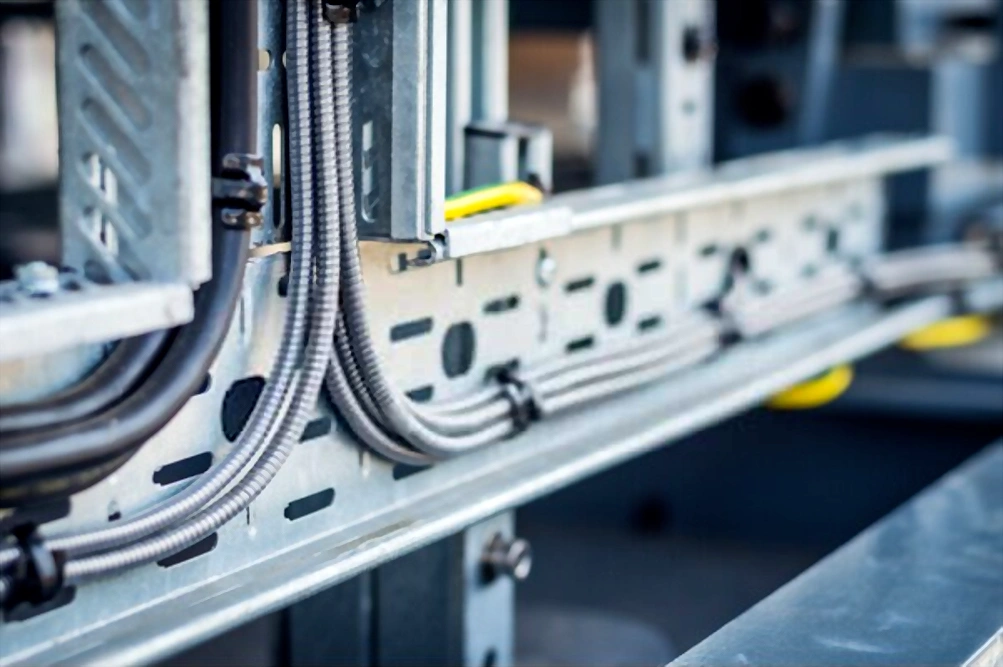
Why Cable Management Matters
Cable management isn’t just about aesthetics; it’s about creating safe and efficient spaces. Poorly managed cables can cause accidents, damage equipment, and slow down operations. Organized cable systems reduce risks and improve the reliability of electrical and data networks. Proper cable management also serves during maintenance. Instead of spending hours tracing tangled wires. Technicians can locate the right cables quickly. It also helps in preventing overheating and interference in electrical systems, which can lead to costly downtime.
- Reduces the risk of accidents and injuries
- Protects equipment from damage
- Speeds up maintenance and troubleshooting
- Keeps workspaces tidy and professional
By prioritizing cable management, spaces become safer, more efficient, and easier to maintain.
Types of Cable Trays
Cable trays are available in various forms and are used in a variety of applications and each comes with its own advantages.
- Ladder Trays: It is suitable in the case of heavy-duty cables. They are very supportive and they also can be ventilated to avoid overheating.
- Solid Bottom Trays: Ideal in supporting sensitive data cables, which require maximum support and protection against external threats.
- Perforated Trays: These trays are support and airflow combined ones. The holes enable the heat to escape and avoid moisture build up.
- Wire Mesh Trays: Light, flexible and easy to carry around, they are typically applicable in office situations and where they are required to be modified with frequent changing.
Safety First with Organized Wiring
When there are electrical systems, safety is of high concern in any space. Disorganized cables also risk accidents and may cause a risk of tripping or electrical fires.
Systematic wiring offers easy tracks and minimizes congestions. Correct installation also means that the cables will not be overstretched or bend at sharp angles and lead to their destruction in the long run. Periodic checks of the cable systems are also used to monitor the wear and tear before it degenerates into a severe issue.
- Keep cables off the floor and in proper trays
- Avoid overloading a single tray or conduit
- Label cables clearly for identification
- Schedule regular inspections
Cable systems provide a secure environment to both employees and the visitors as well as the equipment.
Boosting Efficiency
Well-structured cable system can be very effective in terms of efficiency in its operations. Technicians waste less time in troubleshooting and networks work better as there is less interference and enhancement of airflow.
Planning and sorting cables by purpose also contribute to efficiency. Power cables, data cables and networking cables would be separated to prevent confusion and interference. A simplified design minimizes the time down and facilitates the smooth running of all systems.
- Group cables by function
- Color code to make quick identification.
- The sharp curves should be avoided to avoid damages.
- Pre-plan expansion.
Cable organization will make sure that the existing and future operations are streamlined to perform optimally.
Durable Materials for Long Life
The material used determines the length of the cable system. Common options include steel, aluminum, FRP, and PVC with advantages associated with them.
- Steel Trays: Heavy and wear resistant, best on heavy loads.
- Aluminum Trays: Light, corrosion-free and simple to mount.
- FRP ( Fiber-Reinforced Plastic): Non-conductive and can be used in chemical-prone localities.
- PVC Trays: Affordable and suitable in light weight applications.
Durable materials also ensure the protection of the cables and the costs of maintenance are lowered. They make sure that the system is able to support the environmental stresses and will be reliable through the passage of time.
Easy Installation Tips
Cable systems have to be maximized by proper installation. The stability and functionality are provided by careful planning of routes, measurements, and supports.
One should allow room to future expansions. Modular trays can be easily added without significant disturbances. Attaching trays to the walls or ceilings will ensure that the cables are not placed on the floor and that they can be damaged accidentally. Grounding also plays a very vital role in preventing any electrical hazard as well as long life of the system.
- Cable lengths must be carefully measured and planned.
- Put secure trays on the wall or ceiling.
- Provide room to grow in the future.
- Ensure proper grounding
Proper installation enables easier system maintenance and improved system efficiency.
Cable Systems in Workspaces
Cable systems are no longer restricted to industries. Organized wiring is also applied to modern office, data center and commercial buildings.
Cable management of working areas enhances safety, lessens clutter and promotes productivity. Workers are also free to move about without fear of falling over and maintenance workforce finds it easy to access cables to upgrade or repair them.
- Flexible layouts Use modular trays.
- Individual power and data cables to minimize interference.
- Bury cables under carpetings or walls.
- Label all cables clearly
Planned cable systems provide professional, functional and effective work environments that accommodate people and technology.
Future of Smart Wiring
The cable systems are changing with the technology. The contemporary solutions are modular trays, embedded monitoring and IoT-based systems which enable predictive maintenance.
Smart wiring saves time, facilitates growth and makes electrical networks efficient. These systems are able to change according to the new needs without necessarily having to undergo a total overhaul as businesses expand.
- Quick upgrade designs are modular.
- Predictive maintenance IoT-based monitoring.
- Expandable designs on expanded operations.
- In-built safety measures to increase safety.
Nowadays investing in modern cable systems is the way to make sure that your infrastructure does not experience any downturns in the future with the latest technological improvement.
Also read this: How to Select the Best Cable Tray Manufacturer for Your Project
Conclusion
From messy wires to seamless spaces, cable systems are essential for safety, efficiency, and organization. With proper planning, durable materials, and professional installation from trusted cable tray manufacturers in Chennai, they transform chaotic wiring into functional and visually appealing networks. By prioritizing cable management, spaces become easier to maintain, safer, and ready to support future growth. Organized cable systems are the backbone of modern infrastructure, turning tangled wires into smooth, reliable, and efficient pathways.
FAQS
Cable systems help organize wires, improve safety, reduce maintenance time, and enhance the overall efficiency of electrical networks. They also give workspaces a clean and professional appearance.
Common types include ladder trays, solid bottom trays, perforated trays, and wire mesh trays. Each type is designed for different cable loads and environmental requirements.
Organized cable systems prevent trip hazards, reduce the risk of electrical fires, and make it easier to inspect and maintain cables, ensuring a safer environment for employees and equipment.
Yes, cable systems are versatile and suitable for offices, data centers, commercial buildings, and industrial spaces. They can be customized to fit the specific needs of each environment.
Key factors include load capacity, material durability, type of cable tray, ease of installation, ventilation needs, and scalability for future upgrades. Proper planning ensures long-term efficiency and safety.